
Practices for Responding to Systems.
Practices for agency, resilience, and positive systemic change
We are living inside systems that feel increasingly overwhelming: social, ecological, economic, technological. Many people sense that something is deeply out of balance, yet feel unsure where their agency lies — or whether individual action can genuinely make a difference.
Responding to systems, as a practice, begins from a different question. Not How do I fight the system? or How do I survive it? but:
How do I learn to respond in ways that naturally support healthy systemic change — with resilience, clarity, and ease?
This work is for people who feel the weight of the world, but do not want to become paralysed by it. For those interested in cultivating agency rather than certainty, responsiveness rather than control, and influence rather than domination. It is for people drawn to facilitation, creativity, and relational leadership — whether or not they use those words — and who sense that how we are in everyday life matters as much as what we do.
From autopilot to response
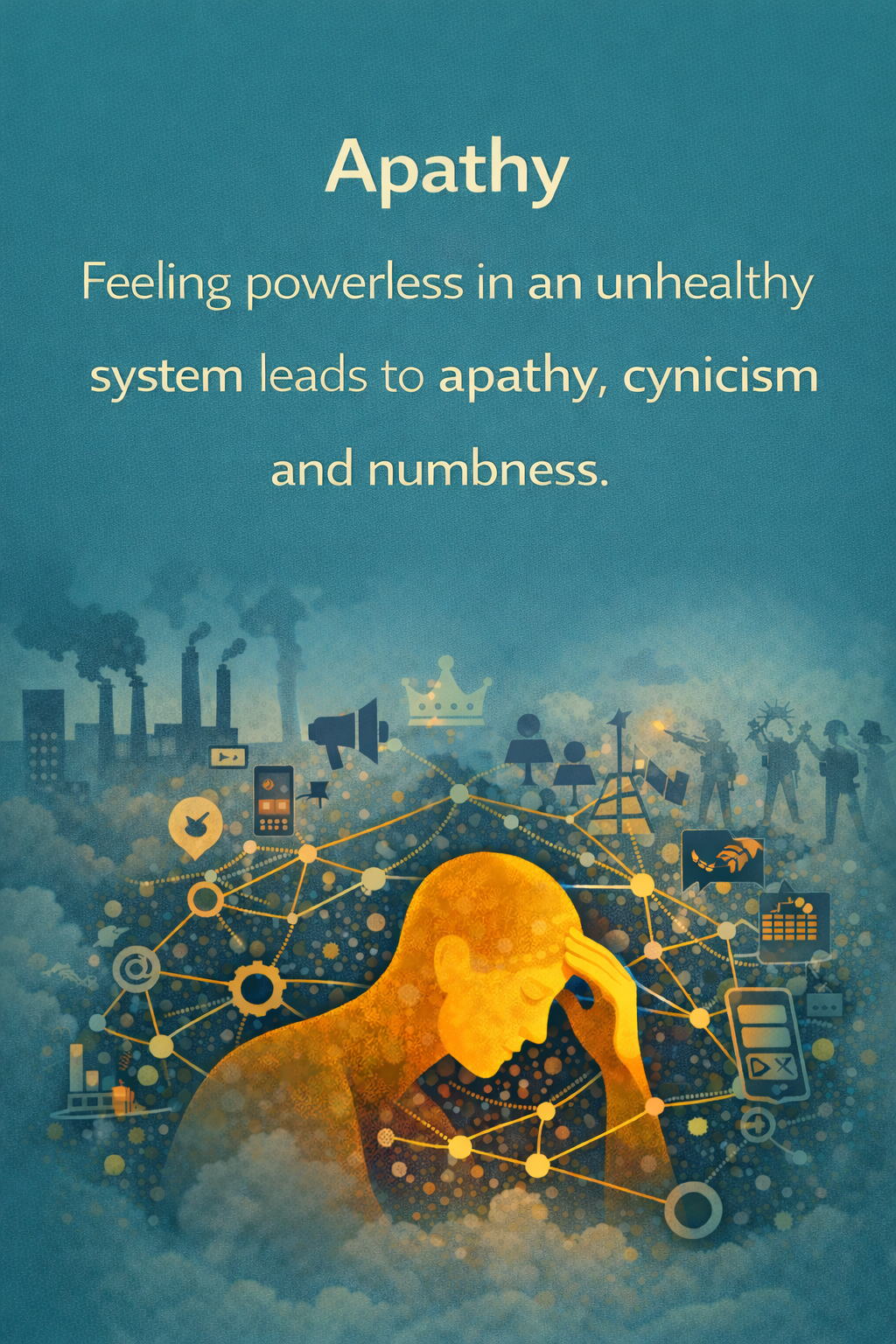
Most systems train us to operate on autopilot.
Autopilot shows up as habitual reactions: rushing, withdrawing, arguing, complying, numbing, performing competence, or replicating patterns we intellectually disagree with. These reactions are not personal failings; they are learned responses shaped by environments that prioritise speed, productivity, extraction, and control.
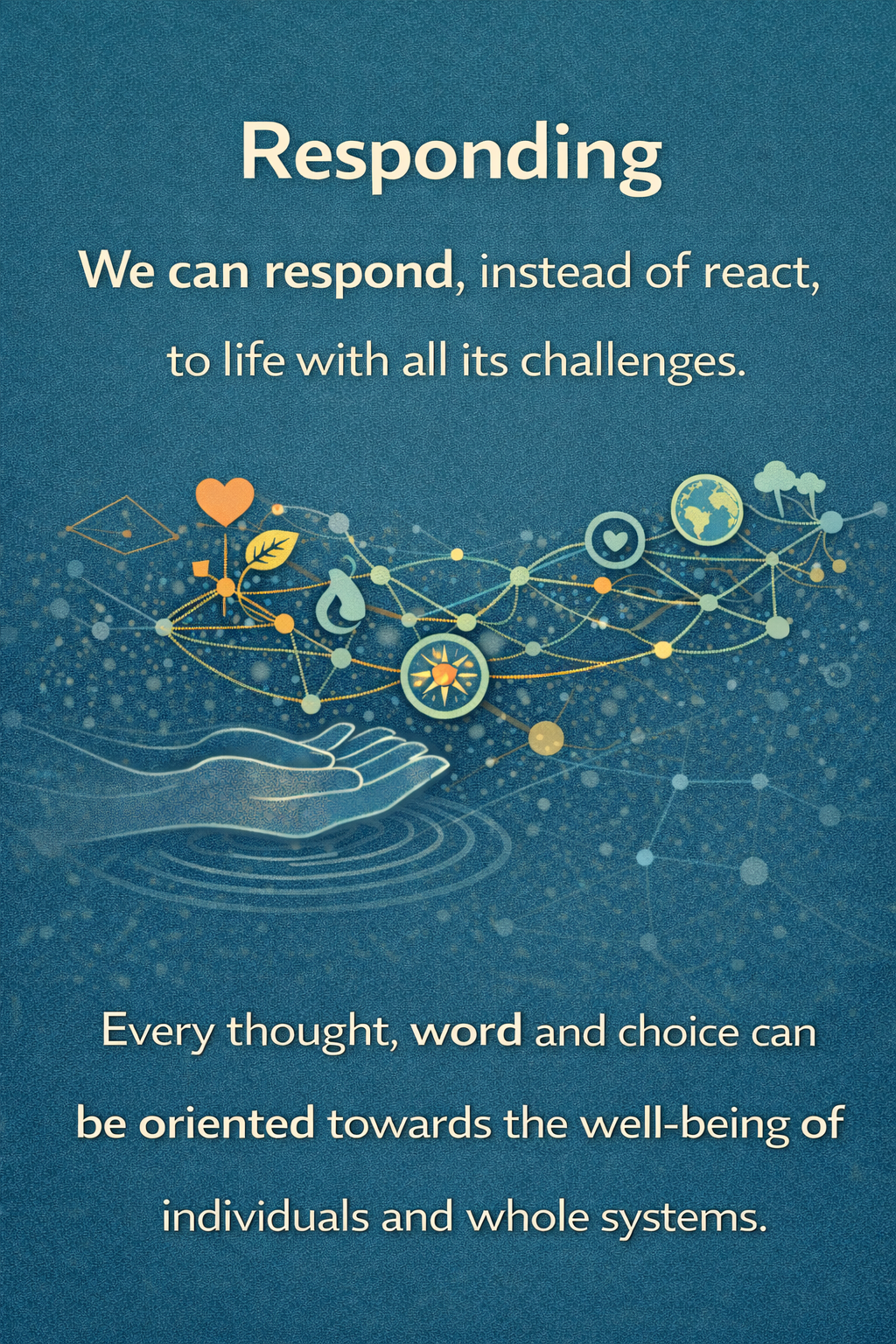
Responding to systems starts by interrupting autopilot — not through force, but through awareness. A pause. A breath. A moment of sensing before acting.
Response differs from reaction because it includes choice. Even a small choice — to listen more carefully, to slow the tempo, to ask a different question, to not immediately fill silence — alters relational dynamics. Over time, these micro-actions accumulate into a way of being that is less driven by fear and more aligned with intention.
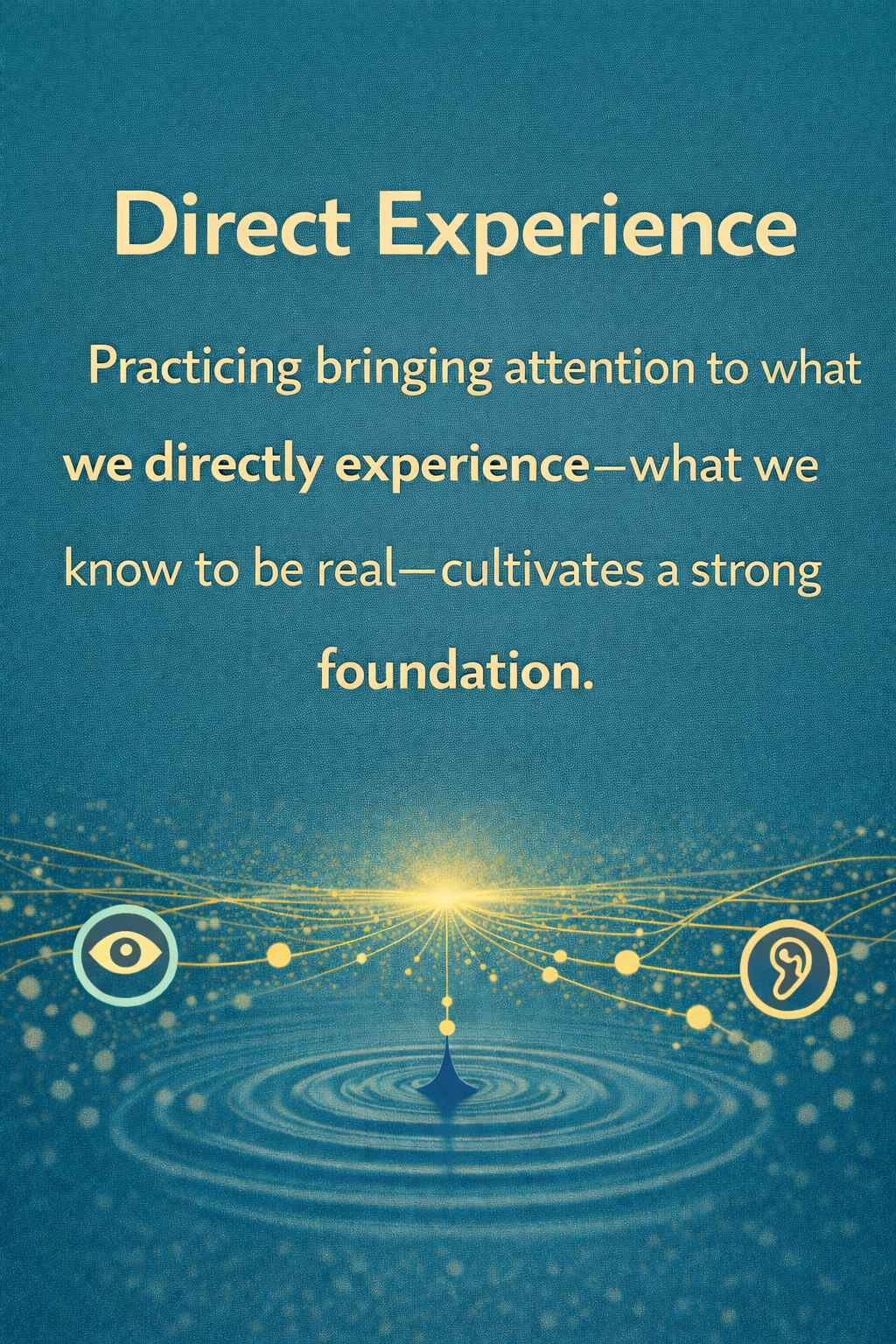
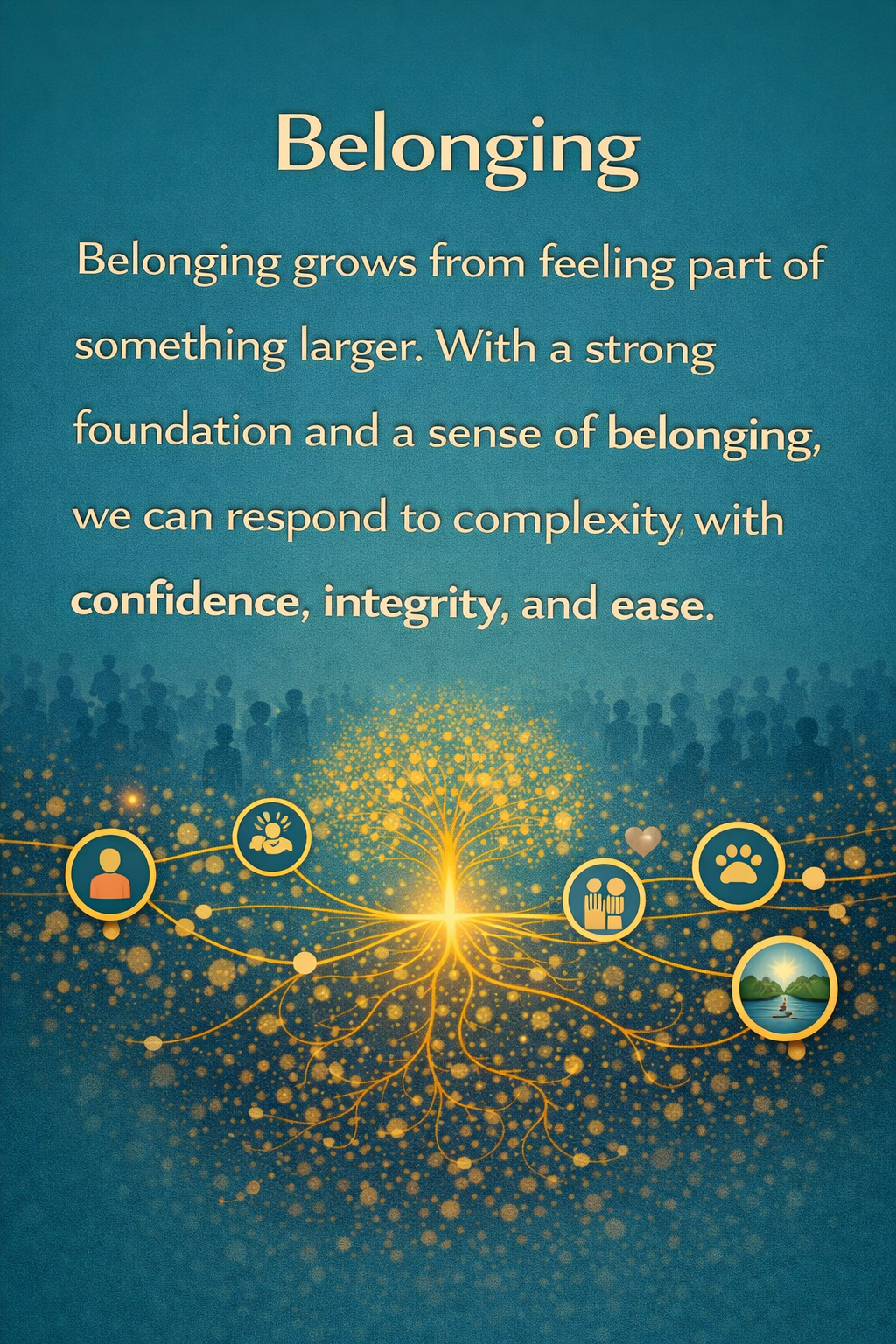
A strong foundation is not withdrawal — it is leverage
Responding from a strong foundation is often misunderstood as self-care or personal resilience alone. While grounding and nervous system regulation are part of it, the deeper purpose is leverage for systemic change.
In complex systems, exhausted, reactive actors tend to reinforce existing patterns. Regulated, attentive, relationally connected actors are far more capable of influencing systems toward health.
A strong foundation allows you to:
• stay present in uncertainty
• resist urgency when urgency is manufactured
• sense what is actually needed, rather than what is demanded
• act without burning out or hardening
This is not about opting out of the world’s problems. It is about participating in change without being consumed by the very dynamics you hope to transform.
Sound, creativity, and everyday agency
Sound and creativity play a central role in this practice because they reveal relational patterns instantly. Sound is always contextual. It moves between bodies. It exposes power dynamics: who takes space, who adapts, who interrupts, who disappears.
Practices drawn from sound, rhythm, and improvisation help individuals reclaim agency without needing dominance. They cultivate confidence rooted in responsiveness rather than assertion. In everyday life, this might look like attuning to conversational rhythm, noticing when you override your own intuition, or sensing when a situation wants less force and more listening.
This is not performance. It is experiential awareness — learning through the body how participation shapes systems.
Emergence as a disciplined practice
Emergence is often misunderstood as “letting anything happen.” In reality, healthy emergence requires conditions.
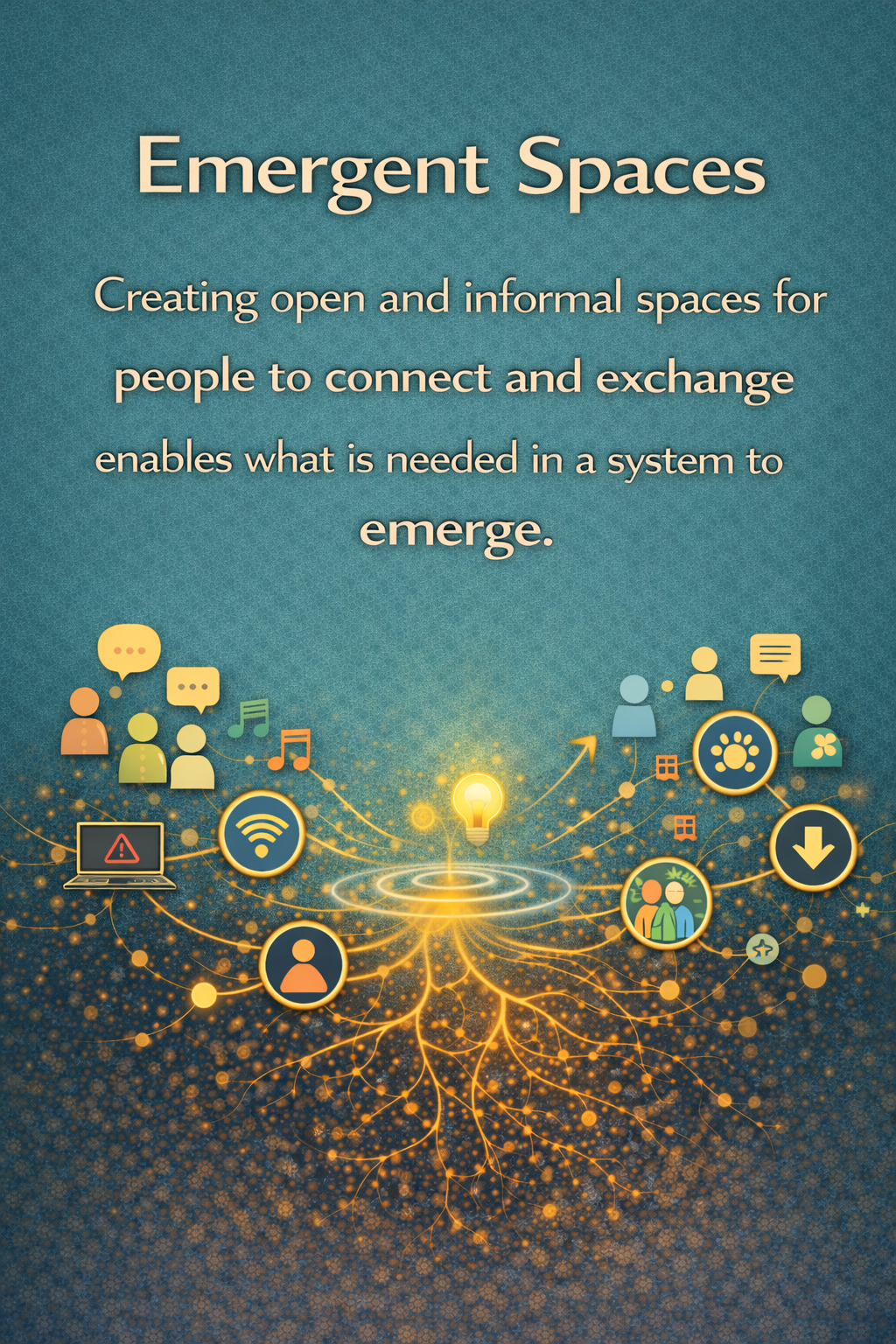
In Movingsounds’ facilitation work, we often describe this as designing conditions for emergence. As an individual practice, it means learning how to create conditions — internally and relationally — where new possibilities can arise.
This involves:
• clarity of intention without attachment to outcome
• boundaries that support safety and trust
• openness to surprise and spontaneity
• the humility to be changed by what emerges
Emergence is not passive. It is an active attentiveness to what wants to happen when control loosens and intelligence is allowed to distribute.
Realness, not performance: the Realometer
One practical tool within this work is the Realometer. It is not about asking what feels impressive, meaningful, or productive, but what feels real.
What do you actually know to be true in your body?
What feels forced, performative, or borrowed?
What feels alive, grounded, and yours — even if it is quiet or unfinished?
The Realometer helps recalibrate action away from external validation and toward internal coherence. When individuals act from what is real for them, their actions tend to be more sustainable and more trustworthy — both to themselves and to others.
Decolonial awareness and distributed agency
Responding to systems responsibly requires recognising that not all systems are neutral, and not all emergence is healthy.
Some systems — particularly those shaped by colonial histories, extractive economics, and concentrated power — actively suppress distributed intelligence. They centralise authority, limit participation, and reward conformity over responsiveness. What looks like “natural emergence” is often heavily engineered and protected.
A decolonial lens asks: Who benefits from this system continuing as it is? Whose intelligence is excluded? Whose voices are required to adapt?
Responding from a strong foundation allows individuals to resist reproducing these dynamics unconsciously. It supports leadership that is relational rather than hierarchical, and agency that is shared rather than hoarded.
Complexity, health, and the direction of change
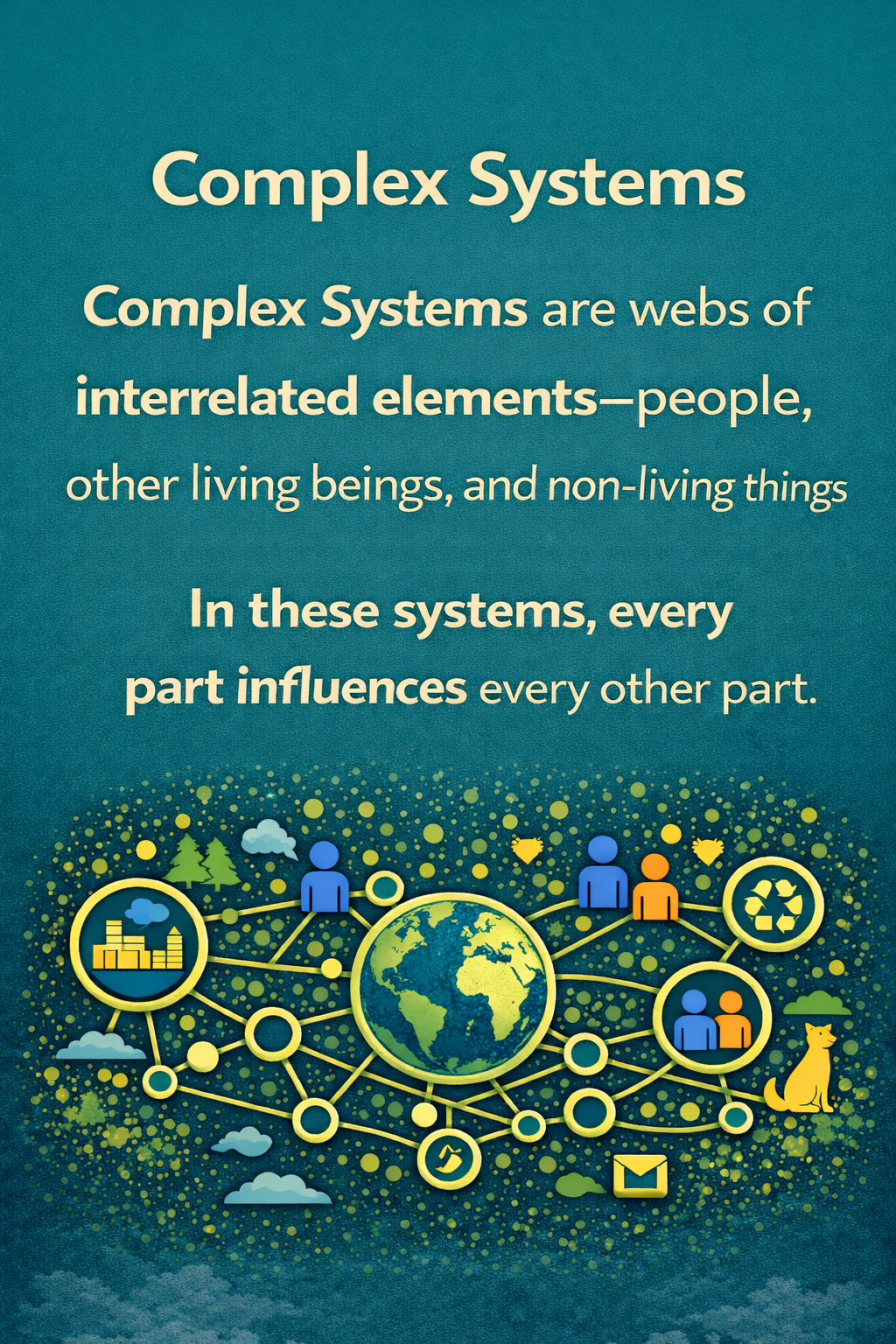
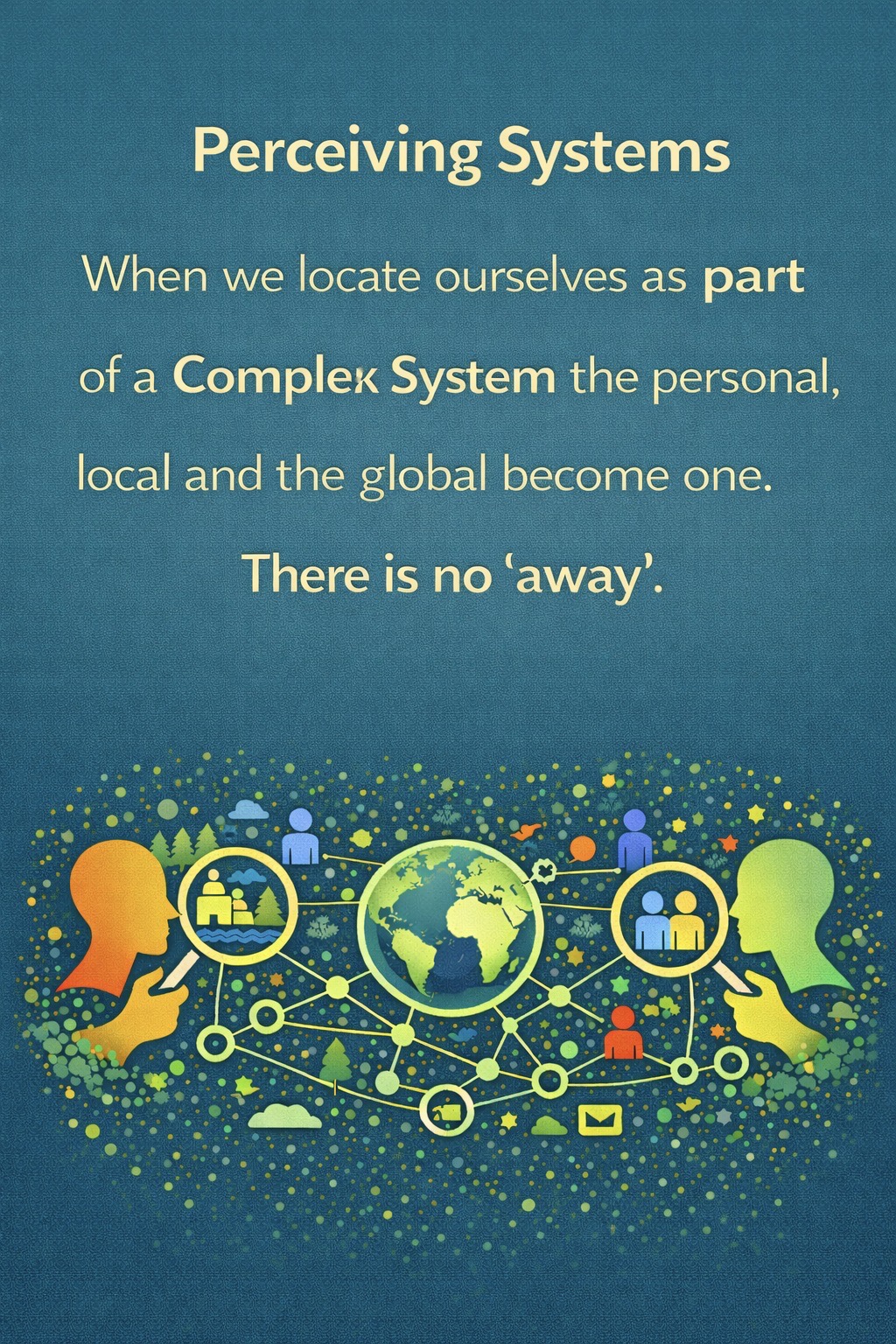
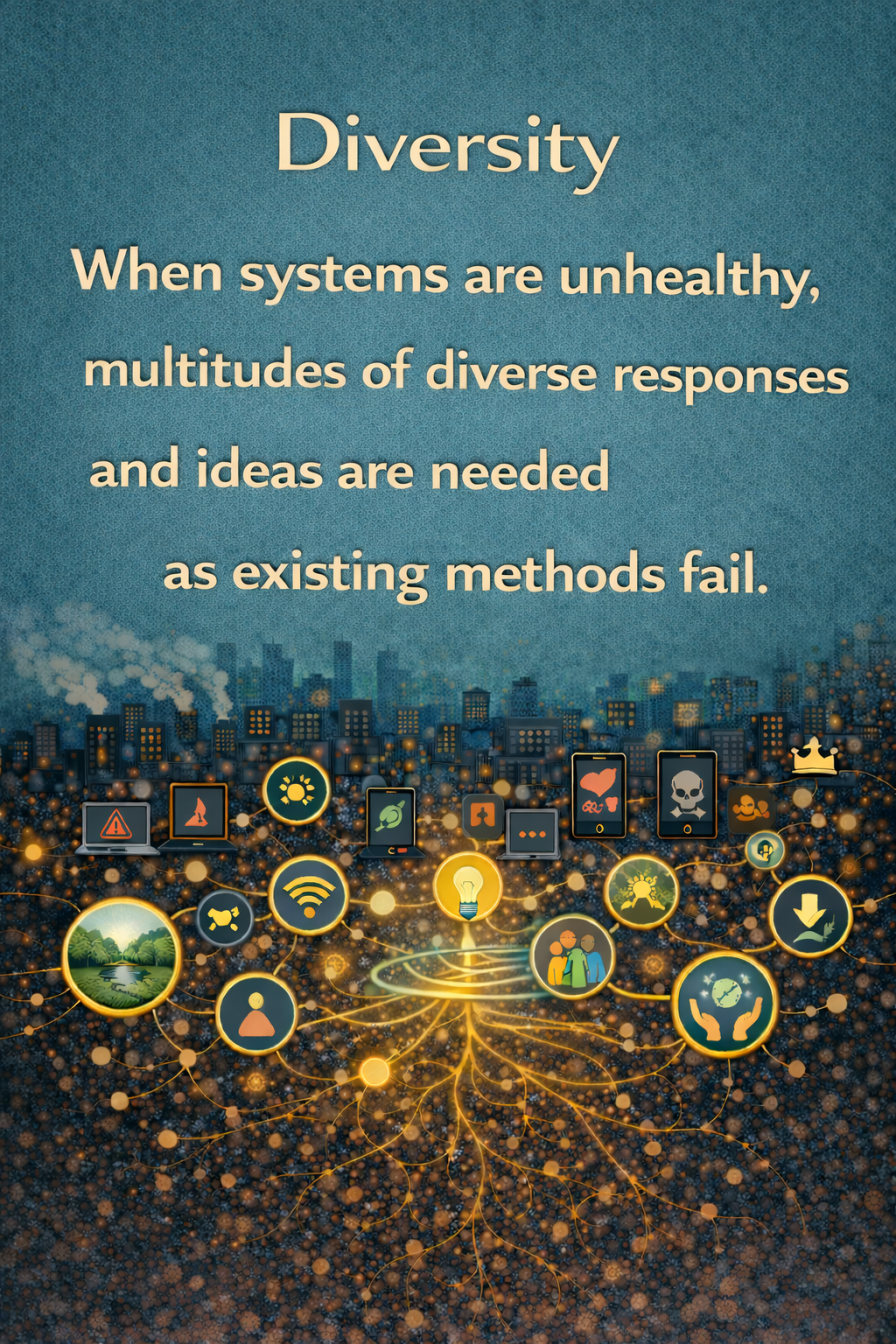
Research into complex adaptive systems shows that systems tend toward health and balance when conditions allow for rich, diverse, and continually renewed relationships. Informal spaces, open communication, and distributed intelligence are not luxuries — they are prerequisites for systemic resilience.
This understanding is explored deeply in Leading from the Emerging Future, which argues that meaningful change does not come from imposing solutions, but from learning to sense and participate in what is trying to emerge.
Responding to systems from a strong foundation is about tuning into that movement — the pull toward safety, flourishing, abundance, and balance — and aligning action with it. Not every emergent system is healthy, but healthy systems do seek emergence when obstruction is removed.
Becoming a facilitator of everyday change
You do not need a title, a platform, or permission to practice this work.
Every conversation, decision, and pause is an opportunity to shift conditions. By responding rather than reacting, by grounding action in what is real, and by trusting distributed intelligence, individuals become quiet facilitators of change.
Responding to systems is not an escape from responsibility. It is a pragmatic form of it.
This is not about heroically saving the world. It is about participating differently — with care, awareness, and confidence — in a world we are always continually shaping together.
Get in touch
if you have any questions or to find out more about how we use this as a foundation for our Movingsounds sessions.
Responding to Systems.
A visual Summary



Get in touch
if you have any questions or to find out more about how we use this as a foundation for our Movingsounds sessions.